------------------------------------------------------------------------------------------------------------------------
Page [1], [2], [3], [4], [5], [6]
--------------------------------------------------------------------------------------------------------------------------
I. Integration As A "Right"
However, a critical examination suggests an alternative perspective regarding whether the preference for racial separation constituted a moral or legal "wrong" at that time. Prior to 1964, segregated living and working arrangements were consistent with both American tradition and broader historical patterns. Proponents of this view argue that there is little historical precedent for two distinct racial groups coexisting in total harmony within a shared political and social framework. Consequently, if integration lacked a clear historical or anthropological foundation, the question arises: could the practice of separation be objectively defined as an act of oppression, or was it simply the maintenance of a long-standing social norm?
Contrary to the narratives often presented in contemporary education, racial separation has historically been a global norm rather than an anomaly. The Civil Rights Movement of the late 1950s and early 1960s—while centered on ideals of equality and justice—also highlighted complex and often contradictory dimensions of human social behavior.
The Black race's so-called 'fight' for justice, freedom, manhood and equality from the late 1950s and early 1960s also produced some very strange inconsistencies in human nature. A few examples :
- African-Americans are remonstrating for the complete nullification of the existence of their distinctness as a people (i.e. they want civil rights legislation that forbids the recognition of race, which eliminates them as a distinct people in America).
- African-Americans are claiming their very manhood and "freedom" can only be achieved within the structure of another male-group - the very group they are claiming is their oppressor. (also this LINK)
- African-Americans want integration - into white male society - to relinquish all effort among their people to achieve self-reliance as a distinct people (which would make them the only people in human history to never achieve this human requirement).
-
African-Americans claim their children are better off learning among another people's children.
Allow me to illustrate this point with a brief narrative: The year is 1770. The feared Sioux tribe, including their warriors, women, and children, march to the recognized boundary of the Crow tribe. There, the Sioux protest being forced to live separately from the Crow. They want to hunt on Crow land, eat at the Crow table, and have their children learn alongside Crow children. They demand inclusion. "Down with the lines of segregation!" the Sioux warriors and their families shout, led by their medicine man. The Crow leaders confront them and ask what they truly want. The Sioux claim they seek only "freedom," "dignity," "equality," and the right to achieve "manhood"—all of which, they say, can only be attained within the Crow tribe. Realizing they are wronging the Sioux with their separate living arrangements, the Crow leaders relent and grant full integration rights to the Sioux people.
Does this scenario sound remotely possible? Of course not. No Native American tribe would ever do such a thing. In fact, throughout human history, no racial or male group has ever demanded integration into another group. Yet, African Americans did precisely this by demanding racial integration rights—civil rights—which included the complete nullification of their existence as a distinct people.
This should not have happened.
(Note: A male-group consists of males who are located within a contiguously defined geographic area and are similar racially, linguistically and religiously. Male-groups are the primary building blocks for every society/ nation in human history i.e. the 'male-group' is the creator of the social stratification system, which is the prerequisite to a society).So, if we base our opinion for predicting human behavior on all of recorded human history, what should we have witnessed in the late 1950s and early 1960s regarding Negro demands? This: The Negro people in America, after almost 100 years of being brutally oppressed, facing persistent racism and bigotry directed at them (they claim), and a denial of freedom, dignity and manhood, being lynching for sport, or for "general purposes" (they claim), beating them on the streets for the sheer joy of it, forcing them to live in substandard housing, exploiting their labor, etc., they simply cannot bear the persecution, the exploitation, the calculated injustices and misery any longer. So they collectively demand a solution that has numerous and undeniable historical precedents: a homeland. A homeland, so after almost 100 years of oppression and misery they can finally achieve the cherished dream of self-determination (i.e. the right to create their own Dominate Male Group - DMG). A place where true freedom, dignity and manhood can be achieved. Where they can finally have the opportunity to be master of their own destiny.
Well, we are all acutely aware that the American Negro never made even the any movement toward achieving self-determination. Indeed, they actually did the COMPLETE opposite! This incredible and unprecedented act of demanding integration into another male group - a group they are claiming is their brutal oppressor - I firmly believe has to be explained. It simply should not be good enough to attempt to explain away this unprecedented demand by saying that civil rights was about the fight for "equality,” "freedom," and "manhood" and that these attributes (for the Negro) could only be achieved by forcing their Anglo oppressor to give them integration rights i.e. Compulsory Inclusionism.
So,
(1) Why didn’t people of African descent in America from 1865 to 1964 demand a homeland in America, whereby they could achieve mastery over their own destiny, and create their own DMG - their own society - separate and autonomous from the American DMG?
Note: I want to emphasize that my theoretical outline from here on only concerns pre 1964.
--------------------------------------------------------------------------------------------
Citations:
1. Blacks did have political seats in state and local legislatures. However, they did not have any control of what legislation was actually made into law. That power rested, in every legislature in America, with white Christian males.
2. Race nullification is not in the US Constitution. Plessy v. Ferg. settled that dilemma in 1896. However, states could create their laws with respect to integration rights for the negro, as consistent with the 10th Amendment. New York, for example, required race-nullification in their states' school system. It should also be noted that presidents Roosevelt (1940) and Kennedy (1961) both issued executive orders forbidding racial discrimination in the federal workforce and government contracts, respectively. Though both were largely unenforceable i.e. white males refused to follow these laws (it was their economic environment - status environment - created by white males and for white males).
3. It should also be noted that the 1964 Civil Rights Act nullified white Christians in America as the recognized 'Americans', stripping them of their DMG status as well their identity as a people. Today, the former 'Americans' are now referred to simply by a color: white people.
Page II >>CLICK HERE

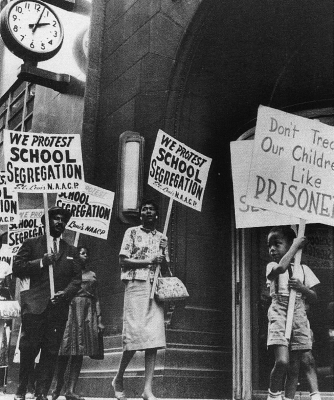
"There is only ONE male group in all of human history that - on their knees - prayed to god to achieve integration rights into another male group's established society: African-American"
ReplyDeleteThat sounds racist dude. I'd lose it.
Mr Wolf your a racist idiot with extreme nonsense views...Any intelligent person that's not a racist there self can see through your BS
ReplyDeleteWow! The pot calling something else black. What a well-crafted, um, sentence (?). Or was that supposed to be two sentences? I won't go near the poor spelling though.
DeleteVery good point , I agree . And as far as indians are concerned they respect the rights of others and human life. Qualities blacks lack as a whole.
ReplyDelete